Sunday, May 31, 2009

A Hot Time in the City


You know that you tire more quickly when it’s 90 degrees rather than 50 degrees, even if you’re just taking a leisurely stroll. And you know that the harder you work, the more tired heat makes you. But why is that? And what can you do about it? When you run in the heat, your body sends more blood to your skin to cool you via evaporation. As a result, less blood, which carries oxygen, goes to your leg muscles, and they have to work harder just to maintain your usual pace. Also, the warmer it is, the more you sweat. This is good, because sweating helps to cool you as your perspiration evaporates. But it’s also bad, because your blood volume decreases. With less blood returning to your heart, your heart has to pump more often to keep the same amount of blood circulating throughout your body. And when your heart rate increases, you’re working harder.\ Running is even tougher on humid days. You generate all that sweat, and it’s supposed to cool you down, but the air is so moist that it can’t absorb much more water. So your sweat stays on your skin rather than evaporating, and your body just keeps producing more and more sweat, and you just keep getting more and more tired. That’s why it’s a lot tougher to run on a 90-degree day in the humid Northeast part of the country, like Washington, DC, than in someplace like New Mexico. Out in the desert, it’s hot, but dry, and your sweat can cool you like it’s supposed to.

Thursday, April 30, 2009

Post-Partum Expression and Running


The answer to how much and how fast to run after giving birth, just like how much and how fast to run before giving birth, differs from woman to woman. A lot of it has to do with how tough your pregnancy and delivery were. A standard guideline is to wait about six weeks after a vaginal delivery, a bit more for a C-section. Again, though, those are just general guidelines. Part of being a runner is being in touch with your body, and you should have a feel for when it’s right to get going again. Gwyn Coogan started running again only 10 days after giving birth, but Janis Klecker waited eight weeks. As some women runners have pointed out, you never know until it’s too late if you tried to come back too soon. In this sense, starting to run again after giving birth can be a lot like starting again after an injury. You’re always going to be wondering if it’s OK to try to progress, and you’re going to feel a lot different running than you used to. That’s especially the case for new mothers who are probably trying to run with more weight than they had before being pregnant.
Your joints and ligaments remain loose for about nine months to a year after delivery. This looseness makes you especially susceptible to injury during this time, so you should avoid hills and uneven terrain. Put all those factors together, and most women runners who have been through the process, even highly motivated ones like Coogan and Klecker, think it’s a good idea to err on the side of caution. Some women say that once they return to their regular running program after giving birth, they feel much stronger. Of course, there’s a psychological side to this. As Louise Kelley, a top local runner in the Washington, DC area, says about being a running mother, there’s nothing like a forced nine months off to get you really motivated.

Play, Don’t Labor: Running While Pregnant


Pregnant women used to be told any exercise beyond even the most low-key, minimal exertion would endanger both their health and that of their fetus. The main concern was that the mother and fetus wouldn’t gain enough weight to produce a healthy baby come birth. It was also thought that when a pregnant woman runs, the fetus would be harmed because of less oxygen and blood flow going to the uterus. Because of fears like these, the American College of Obstetrics and Gynecology (ACOG) used to say that pregnant women shouldn’t work out strenuously for more than 15 minutes and that they should keep their heart rates below 140 beats per minute. In other words, don’t really run. A lot of faithful women runners chose to ignore those recommendations when they became pregnant. As they did, and seemed to produce normal, healthy babies, more studies were done about running and pregnancy. Among other good things, these studies found that the fears of damage to the fetus by running moms-to-be were unfounded. The pregnant body has compensatory mechanisms for decreased oxygen and blood flow to the uterus. It’s been shown that both the woman and fetus have all the fuel they need when the woman runs, even in the late stages of pregnancy, when fetal growth really takes off. Hey, Sue Olsen had to get energy somewhere during that 24-hour race, after all.
In terms of birth and after, studies have shown no real difference between sedentary pregnant women and active ones in these important matters:
➤ Complications of pregnancy, labor, and delivery
➤ Type of delivery (C-section versus vaginal)
➤ Circumference of the baby’s head
➤ Overall health of the baby
➤ Weight of the baby at birth
As for weight gain during pregnancy, one study found that active pregnant women put on about 30 pounds each, compared to 39 to 42 pounds for nonexercisers. ACOG recommends that most women gain 25 to 35 pounds.
One study compared women who worked out vigorously, including running, to those whose only exercise while pregnant was walking. When the children of these women were five years old, those of the intense exercisers scored higher on tests of intelligence, coordination, and language skills.
Because of all of this evidence that vigorous exercise is safe, ACOG revised its guidelines in 1994. Now, it encourages women who are fit and active when they become pregnant to remain so as long as they can comfortably during pregnancy. So long as you keep in close contact with your doctor and use common sense, ACOG says, it’s OK to run vigorously throughout your entire pregnancy.
Now, whether Sue Olsen’s exploits would get the ACOG seal of approval, I’m not sure. But I bet they wouldn’t have any problem with Joan Benoit Samuelson, who ran five miles on the morning before she gave birth to her second child, and remembers the
run as one of the favorites of her whole life. Remember, this is a woman who won the Olympic Marathon!
Sue and Joan are among the luckiest ones. No matter how many green lights ACOG gives you, and no matter how dedicated you are, there comes a time when intensive weight-bearing exercise like running becomes too uncomfortable to be worth doing for most pregnant women. If and when that occurs will vary from woman to woman and even from pregnancy to pregnancy for repeat moms. That’s where the common sense part of ACOG’s current guidelines come into play.
When running isn’t an option anymore, many women runners turn to less-intensive cross-training options.
When Janis Klecker, a 1992 Olympian in the marathon, was six months into her second pregnancy and pregnant with twins, running became a hindrance rather than a help. So she switched to swimming, walking, and riding a stationary bike. An Olympic teammate of hers from 1992, Gwyn Coogan, ran until the seventh month of her pregnancy, and then switched to hiking, biking, and swimming. The key is that they sensed when the running wasn’t worth doing anymore, accepted that temporary situation, and found other, more comfortable, ways to stay fit and active.


Tuesday, March 31, 2009

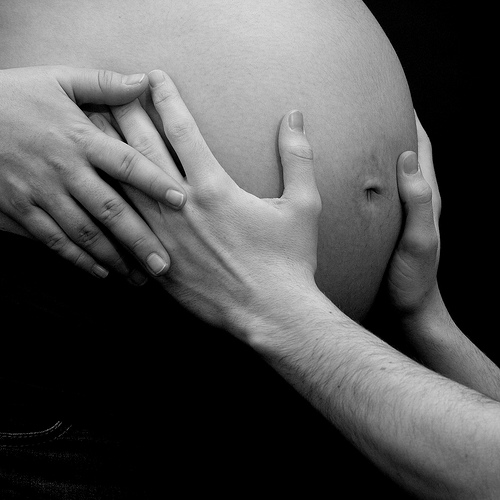
Two for the Road: Running and Pregnancy


In June 1995, while 8 ½ months pregnant, Sue Olsen ran a marathon in 4:00:50. The following week, Olsen competed in a 24-hour race. Less than 30 hours after finishing that mega long event, she gave birth to a healthy son who weighed seven pounds, three ounces. OK, so Olsen is a bit on the extreme side. But I thought you should know about her because she, and her healthy son, are evidence that being pregnant doesn’t necessarily mean lying on your back for nine months eating chocolate-covered pickles.

Running and Birth Control


Obviously, birth control is an incredibly personal choice. I just want to tell you what some women runners have experienced. A few studies have found that women runners are less likely than sedentary women to take birth control pills. Many women report that they just don’t feel as good while running when they’re on the pill. Fatigue and nausea are common side effects of being on the pill, as is weight gain. Because the pill eliminates the premenstrual and early flow phases of a period, the pill can be a good birth control choice for women runners who feel that their running suffers at these times. Overall, though, most women runners who have found a successful alternative to the pill prefer to avoid oral contraceptives.

Women of Steel: Iron Needs


Women runners should be more careful than men runners about preventing low iron stores. Iron is used to produce hemoglobin in your red blood cells. As mentioned before, one of the reasons that women are, on average, slower than men is because women have less hemoglobin. This condition is made worse if your iron stores are low, because then your hemoglobin levels become lower. When hemoglobin levels decrease, less oxygen reaches your muscles when you run, so running your normal pace feels harder. Why are women runners more susceptible to low iron stores? For starters, all women lose iron through menstrual blood. On top of that, women runners tend to be more careful about their diet than sedentary women. That’s usually good, except that one of the things that women runners often get more selective about is eating meat. Limiting meat can be a good way to cut fat out of your diet, but it also can mean too severely limiting your iron rich food choices.
Good food sources of iron that aren’t high in fat include the following:

➤ Lean red meat and dark poultry
➤ Dark green, leafy vegetables
➤ Legumes
➤ Dried fruit
➤ Whole-grain or enriched cereals and bread

You can increase how much iron you absorb from a food by eating foods rich in vitamin C at the same time. Using cast-iron cookware also helps. On the other hand, you decrease how much iron you absorb from foods when you drink coffee or tea with meals. Premenopausal women runners should shoot for an iron intake of at least 15 milligrams (mg) per day; post-menopausal women need 10.
Other reasons that women runners might have low iron stores apply to men, too: loss through sweat and urine, increased blood volume with training (which lowers iron concentration in the blood), and what’s known as footstrike hemolysis, which is the breakdown of red blood cells from your feet repeatedly hitting the ground. When you have blood tests done, ask for your hemoglobin and serum ferritin (a measure of your body’s iron stores) levels to be checked. Normal hemoglobin concentration for women is from 12 to 16 grams per 100 milliliters of blood. Because of the increased blood volume that comes with running, a reading of 11 can be considered safe for a women runner, but anything below that is asking for trouble.
The acceptable range for serum ferritin is 10 to 20 milligrams per milliliter of blood. Some experts caution that any reading below 25 can hurt your running.

Saturday, February 28, 2009

Running and the Menstrual Cycle


Just as the effects of menstruation itself differ greatly from woman to woman, the effects of menstruation on running performance vary greatly as well. some women notice no difference in performance; others notice a great deal of difference. If your period is going to affect your running, it’s most likely to occur during the premenstrual and early flow phases of the cycle. The good news is that many women runners find that their running helps to ease cramps, bloating, headaches, fatigue, and all of those other friendly monthly visitors. To best deal with the effects of menstruation, track how your cycle affects your running in a training log, and then plan accordingly. For example, if you notice that running often seems harder during your premenstrual phase, accept that and don’t try runs that are longer or harder than usual during this time.
On the not-so-good side, running can lead to increased bleeding. Some of the painkillers, such as ibuprofen, that help with other side effects can also reduce bleeding. The increased bleeding usually isn’t so great that it’s visible. But if you’re worried about this, do what Olympic gold medalist in the marathon, Joan Benoit Samuelson, does and run with a tampon in a plastic bag pinned inside of your shorts or tights. Women runners sometimes don’t have periods. This condition is called amenorrhea, and although it might sound like a dream come true, it’s not good. It usually means that little or no estrogen is circulating in your body, which can lead to your bones becoming weaker, as well as short-term infertility.
The causes are complex, but most experts think that amenorrhea is caused more often by not eating enough than by exercising too much. Running alone can’t be named as the cause, given that some women train more than 100 miles a week and still have regular periods. If your periods stop or become irregular (more often than every 25 days or less frequent than every 35 days), see a doctor. Just don’t let him or her convince you that running is solely to blame.