Thursday, March 31, 2011

Teen Angels: High School Runners


Once kids are in high school, it’s OK for them to become more serious about competition. By this age, they’ll be able to understand what training is and how sometimes you have to suffer in the present to have a better future. Racing might still be frustrating (it is for everyone at some point), but if they’ve freely chosen to compete, then a few bad experiences probably won’t sour them on running for the rest of their lives. Also, by this age, their bodies can handle the training better. Training for even the longest distances usually offered in high school (5K for cross-country, two miles for track) involves a lot of short, fast speed work, usually on the track. By high school age, more runners are going to be able to do this type of training without breaking down. Most children who race the mile or two-mile in outdoor track are going to top out at about 30 miles a week. Anything more than that, and I’d get a little wary. Certainly, some teens can handle more running than that, especially if they started when they were younger. But even in high school, I think it’s worth erring on the side of caution.
Some coaches are going to encourage members of the team to run more. It’s not unheard of for cross-country team members to run 70 or so miles a week. Whether that’s a good idea is going to be a judgment call. If a high school runner is doing that kind of mileage and understands why, then it can be OK, so long as the runners on the team are progressing and enjoying themselves. But if most members of the team aren’t progressing, then the coach is trying to use methods that might work with older, more developed runners on younger ones who aren’t ready yet for that high of a level of training. Because most high school runners are new to the sport, they should see steady progress in bringing their times down. If they’ve plateaued, it usually means that they’re doing too much.

The Right Races for Rug Rats


In the 1970s, a young runner named Wesley Paul ran faster than 3:00 for the marathon at age 9, the youngest that anyone had ever done so. This feat got him a lot of attention in the press, and one running magazine even speculated that he would grow up to break the world record. You don’t hear about Wesley Paul these days, however. That’s not surprising. For whatever reason, almost every child who is highly motivated to compete in races at a young age doesn’t become a lifetime runner. Probably for the same reason that kids who are gymnastics dynamos aren’t big on tumbling when they’re 40 years old—the activity is associated with a lot of pressure, not fun, and we all have enough pressure in our adult lives as it is.
I’m not a big fan of age-group track meets for junior high and elementary school kids. There’s just too much of a risk that the children are so serious at such a young age for the wrong reasons. Sure, some of the runners might be mature enough to be able to state why they’re training hard toward meeting competitive goals, but I’d rather err on the side of caution. Kids who have the ability and interest to become top runners will have plenty of time to work on that goal later, when both their minds and bodies are more mature, and they can make fuller use of their potential.
Kids are naturally competitive. Watch the start of these children’s runs, and you’ll see the term “youthful exuberance” defined. They just tear away from the starting line in a sprint! But to keep the events fun and worthwhile for all the young runners, children’s races should give some kind of award to every finisher. At a young age, the top finishers are going to place first because they have more talent for running. Preparing for the event doesn’t factor into winning as it does for adults, especially at short distances. Acknowledging all of the participants, by giving them all identical finisher’s medals, for example, gets across the idea that the most important victory is participating. This emphasis encourages the slower kids to keep coming back and to view running as a sport that’s for everyone, not just the talented few. Kids see enough of the elitist view of sports as it is, with the overemphasis that school sports such as football and basketball receive.

Monday, February 28, 2011

The Fun of Family Fitness


My wife and I like to introduce our two daughters to as many activities as possible. Sure, running is one of them, and it’s kind of hard for them not to notice that it seems as though Daddy is always heading out the door for a run. But we never tell them how running is the greatest sport, or how they’re wasting their time when they’re skating, dancing, boating, playing basketball or tennis, or doing any of the other activities that they’ve found that they enjoy.
What we want to do is get across the idea that fitness is a lifestyle. We want to show them that being active and healthy and feeling good while using your body on a regular basis should be the norm. Children are much more likely to develop good fitness habits for the rest of their lives if they see that fitness is important to you. That’s a much better message to send than presenting fitness as an occasional intrusion that you have to tend to out of obligation. In terms of running, this approach means that if your child expresses an interest in it, explore that interest together. Go for a run with your kid. Take him or her to your races, not so much to run, but to show the festive atmosphere that races have. Do what you can to expose your child to those elements of running that are going to have the most appeal to kids.
You might not think so, but one of the biggest appeals of running is going to be the chance to spend some quality time with you. Young kids, especially, will do almost anything to get adult attention. So if they want to run with you, indulge them. Running together can strengthen your relationship, because the child will see your runs as one-on one, undivided attention time. Let these runs unfold on the child’s terms. That might mean jumping through puddles, or stopping to look at animals, or heading home after just a few minutes. Let them set the pace and the course. Remember, it’s supposed to be fun for them, which means feeling good right then.

Keep It Enjoyable!


Even if your kids want to run for all the right reasons, I don’t think that children under the age of 14 should look at their running as training. This advice doesn’t mean that children under this age can’t run as much as 20 miles a week. If they want to run that much, enjoy doing so, and don’t get hurt, I think that’s an acceptable upper limit of mileage for preteens. Three miles or 30 minutes are good measures of the farthest that young runners should go at a time.
But although kids may run as much as adults, running should remain a part of their play and one of many regular activities, not something that they plan and obsess about. Going for a run should be primarily about enjoying it on that day, not to build endurance so that they can try to run twice as far in a month. This book has emphasized that if you’re going to make progress in your running, then you need to be consistent with it. Kids who run should ignore all of that. If they hit a spell where they don’t feel like running for a month or two, don’t force them to. If you do, you’re sending the message that running is something that they have to do, not that they want to do.

Be a Running Role Model


You certainly shouldn’t force children into running. Little League syndrome is as bad in running as it is in baseball. Children can sense when you’re pushing them into an activity. They might not resist immediately, but eventually they will. Having fun consistently ranks as the top reason that kids give for participating in sports. For preteens, fun almost always means the here and now. Most preteens haven’t developed what psychologists call abstract thinking, the ability to set long-term goals and to see how doing something that might not feel good right now is worth it for the pay-off later. In a certain sense, isn’t that what a lot of running is about? A big motivation for getting out for a run today is because you know that doing so will benefit you later—you’ll feel better the next day, or you’ll be able to run faster in a race a month from now, or you’re working toward a weight-loss goal, or you’re making one of an ongoing series of contributions to fighting disease, and so on. When children don’t come to running on their own terms, they’re not going to like it because they don’t yet have that sense of delayed gratification.
If a kid wants to run and can state why and seems to enjoy it, then I’m all for some low-level regular running.
Children’s attitudes toward running largely stem from what they notice about how the adults around them approach it. If you’re always walking around the house before your runs moaning about what a horrible chore running is, then don’t be surprised if your kids don’t show much interest in it. But if your children see that running to you means getting outside and exploring and feeling good and being with your friends and having fun, they’ll probably think otherwise. Running will seem like a form of play.

Friday, December 31, 2010

Should Children Run?


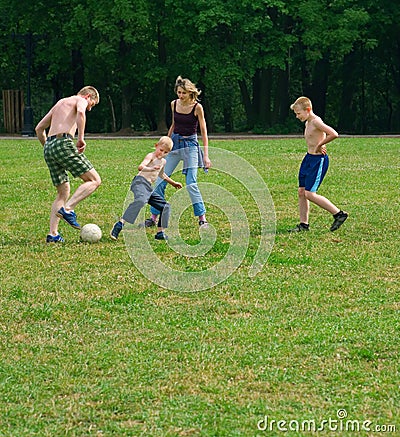
Of course children should run! Running should be as much a part of children’s lives as walking, skipping, playing tag, and so on. It should be a normal part of their play. For preteens, play can and should be the major source of physical activity. Some researchers have estimated that when kids are left to their own devices, they’ll cover as much as six miles a day on foot. Obviously, they don’t cover this distance all at once, and it’s a lot different from when an adult goes out for a six-mile run or walk, but that’s OK. At that age, most experts would agree, what you want is for your children to be active in a variety of activities that they enjoy.
Of course, many kids aren’t active. The average American teenager watches 22 hours of TV a week. Keep that in mind as you ponder these scary statistics: Only one-third of children ages 6 to 17 meet minimum standards of cardiovascular fitness. Of children between the ages of 5 and 8, 40 percent are obese, meaning that they weigh at least 20 percent more than they should. According to one survey of children in grades 4 to 12, 49 percent of boys and 62 percent of girls get nine hours or less of physical activity each week. When you consider that these estimates likely include a lot of time standing around on a ball field during gym classes, the figures seem even worse.
Now the question of whether children should run changes. Should children run in an organized way, for fitness, the way that adults do? That one’s a bit trickier to answer.

The Chase Corporate Challenge Series


Like the Race for the Cure Series, the Chase Corporate Challenge Series does a great job of luring new runners into the sport. It exposes occasional fitness runners to the racing scene and thereby shows them how fun it can be.
The Chase Corporate Challenge Series consists of runs in 16 cities in the United States, plus two overseas. The series culminates in a national final held on Park Avenue in New York City in October. In all, more than 175,000 runners take part in the series each year. Each race features team awards as well as individual recognition, such as first executive finisher. Each race is 3.5 miles long—a good challenging distance for the serious racers, but also a conquerable distance for the more casual runner.
In addition to introducing casual runners to the fun of racing, the Chase Corporate Challenge Series benefits runners in other ways. As you probably know, balancing your running with your work life can be tough. Work-based programs such as the Chase Series encourage employers to see their employees as more than just employees. They help show what employees do in the rest of their lives, and how important those pursuits are to them, and how having a healthy, rewarding life outside of work adds to, rather than detracts from, performance on the job.